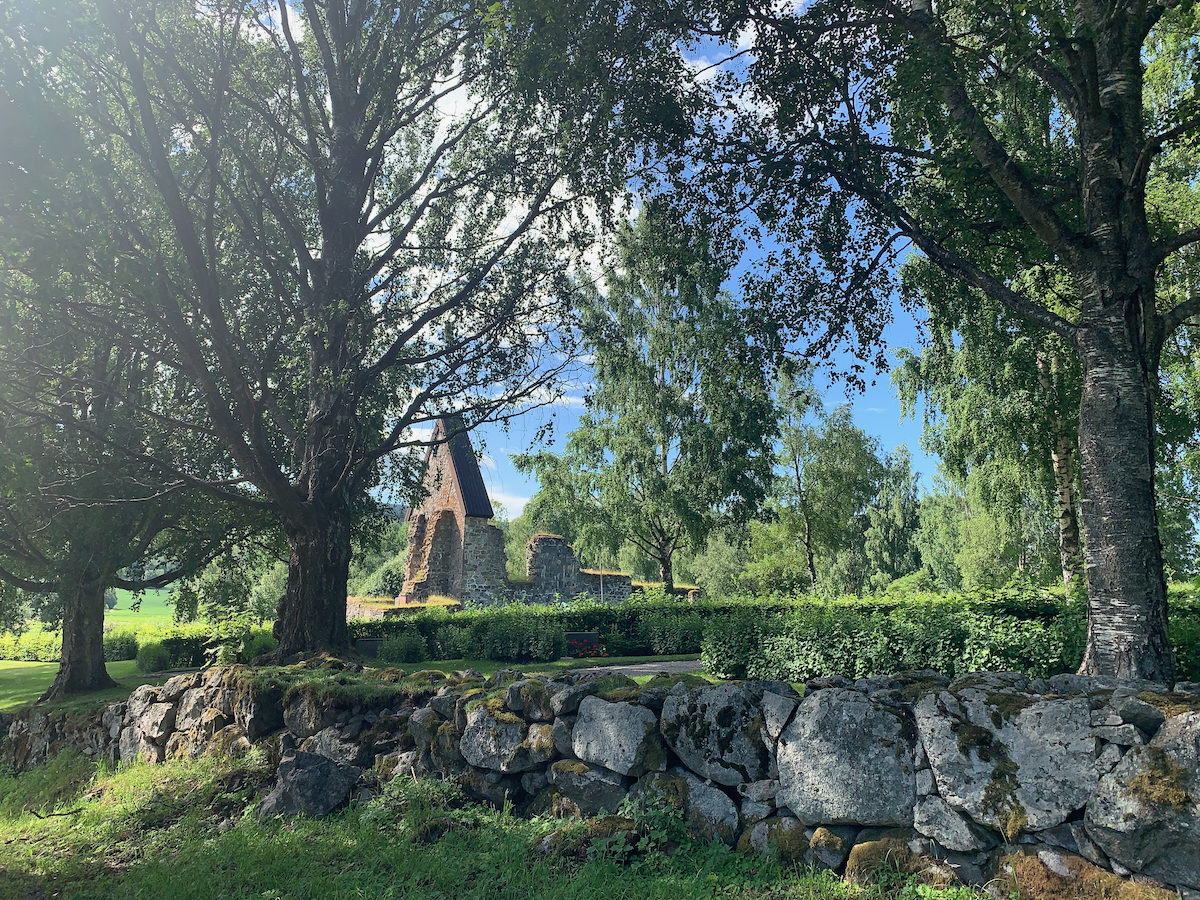
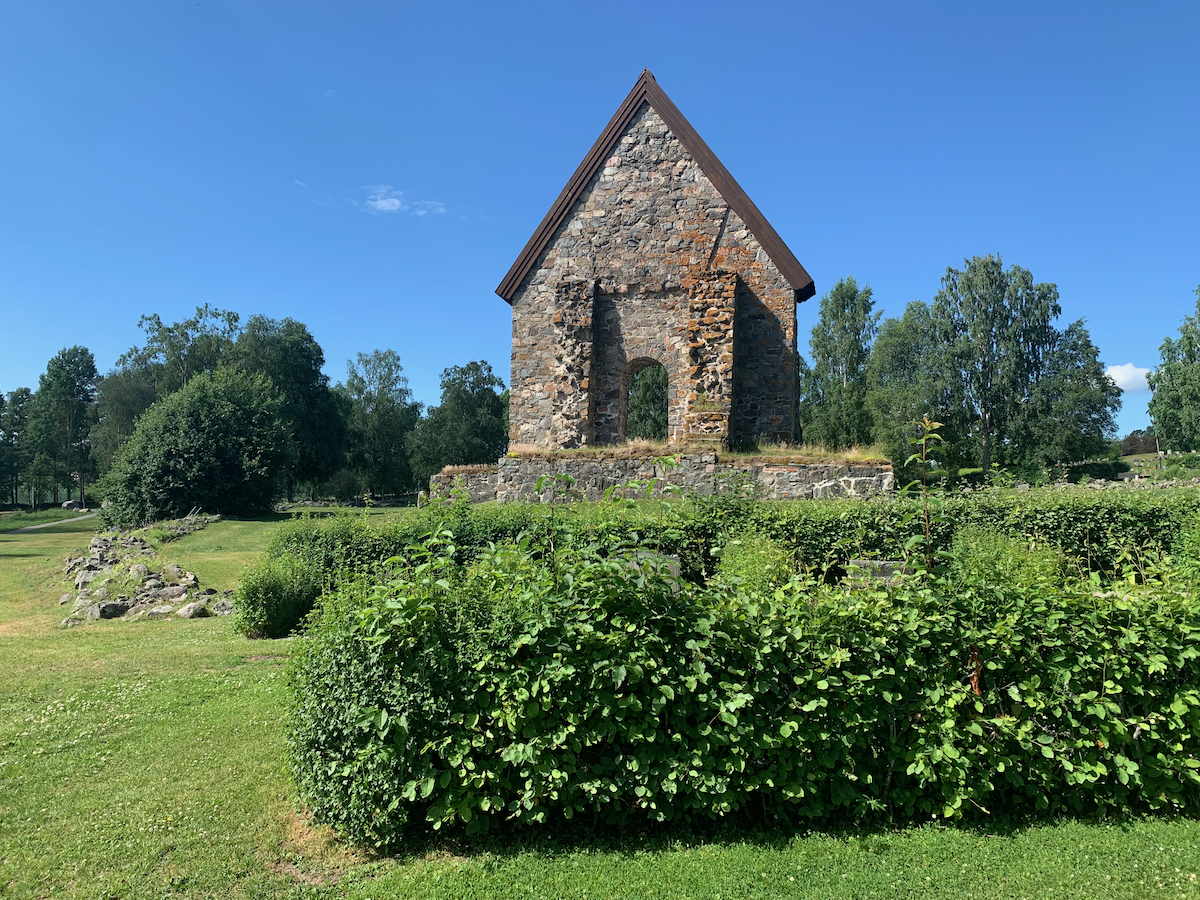
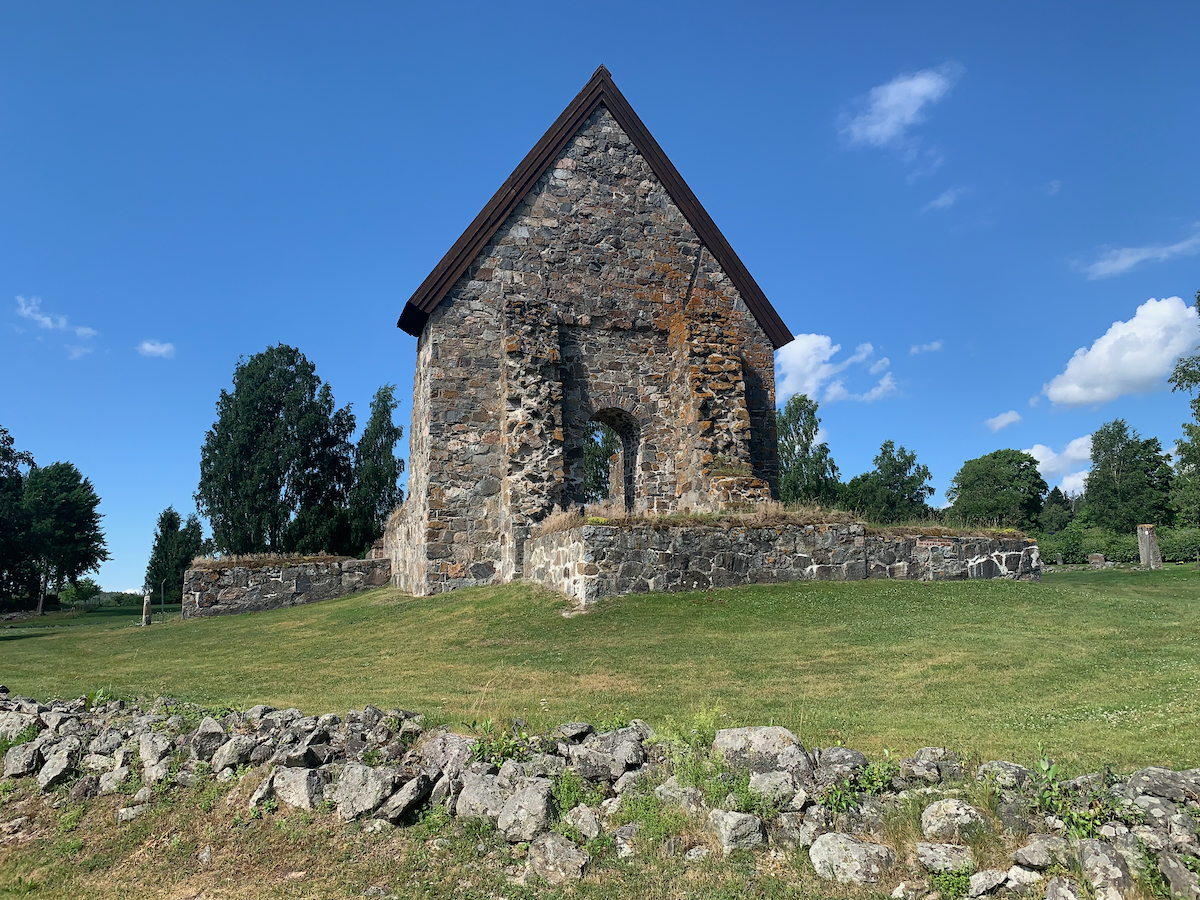
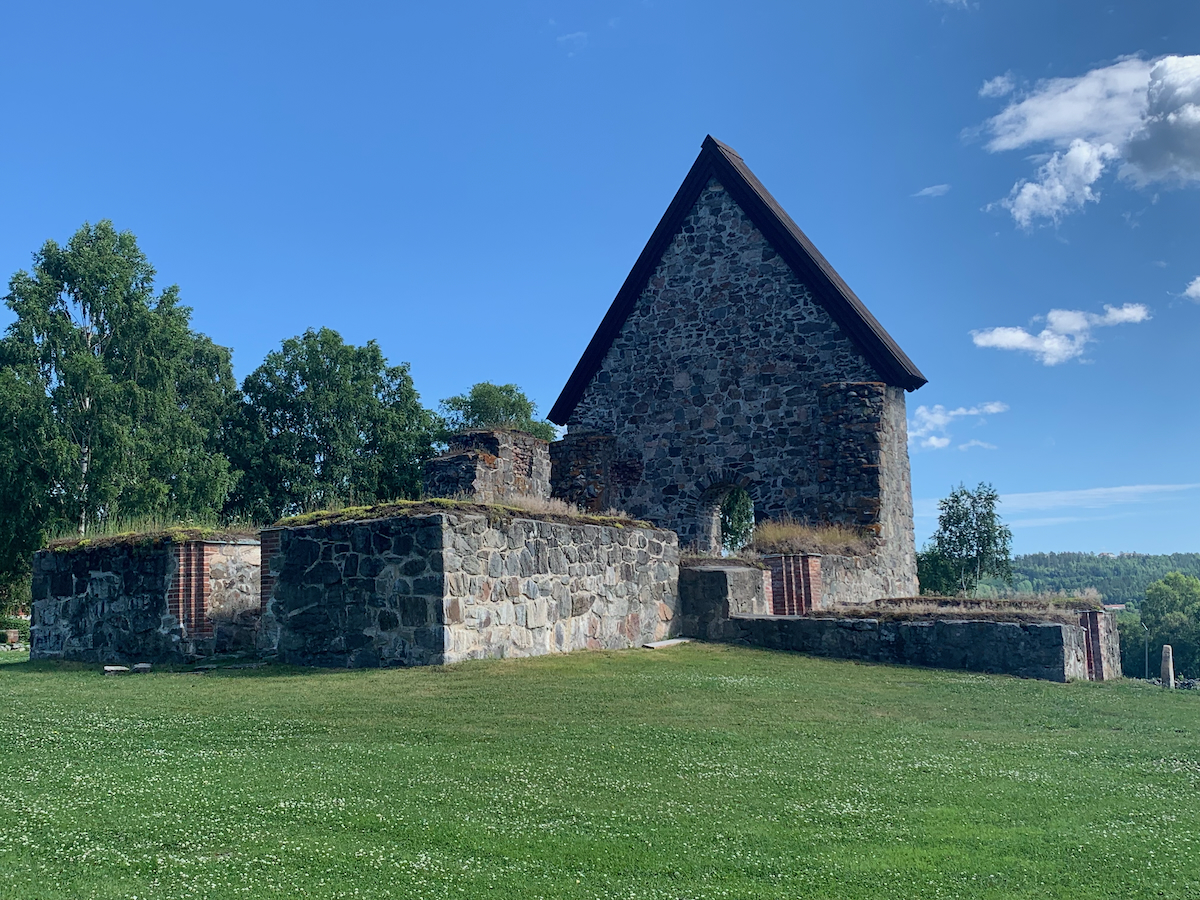
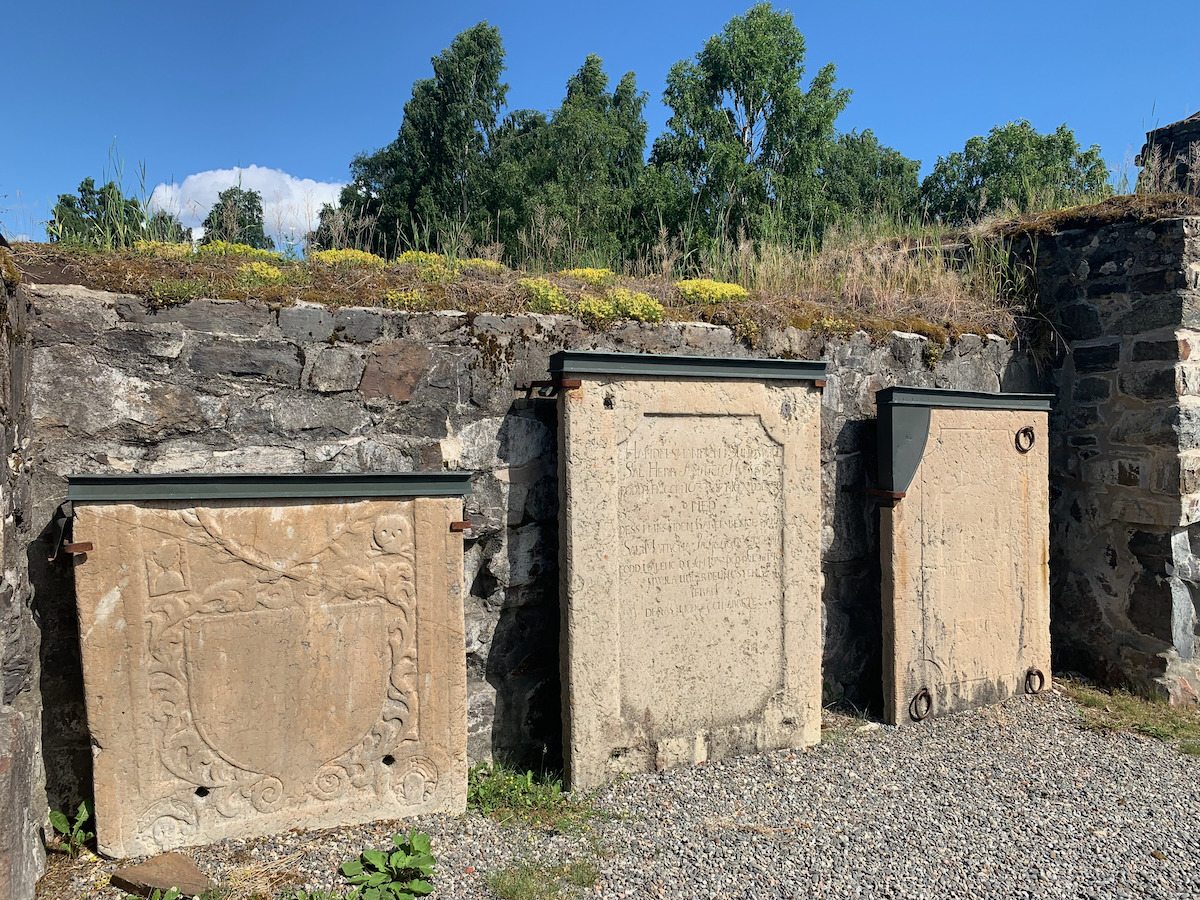
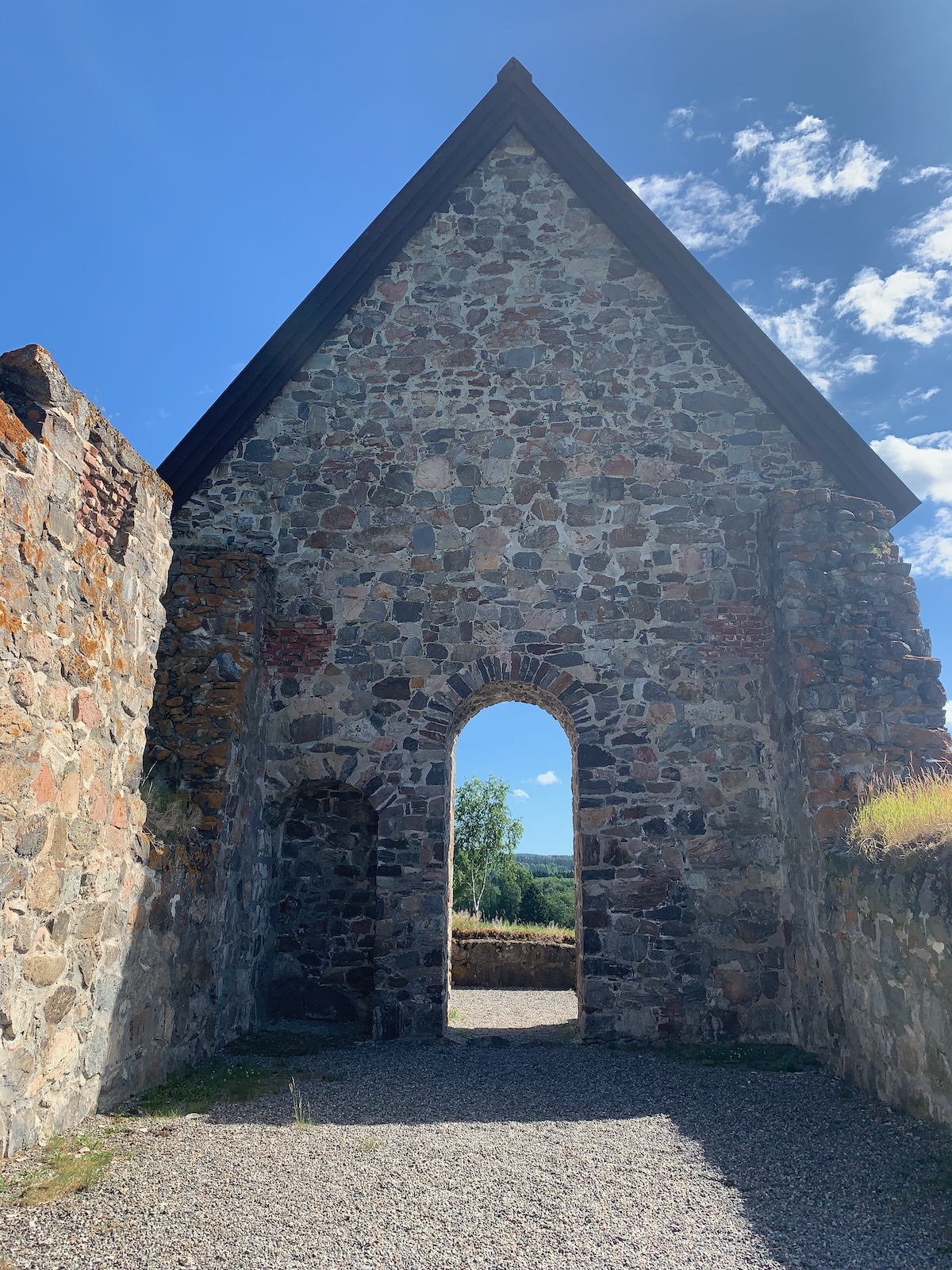
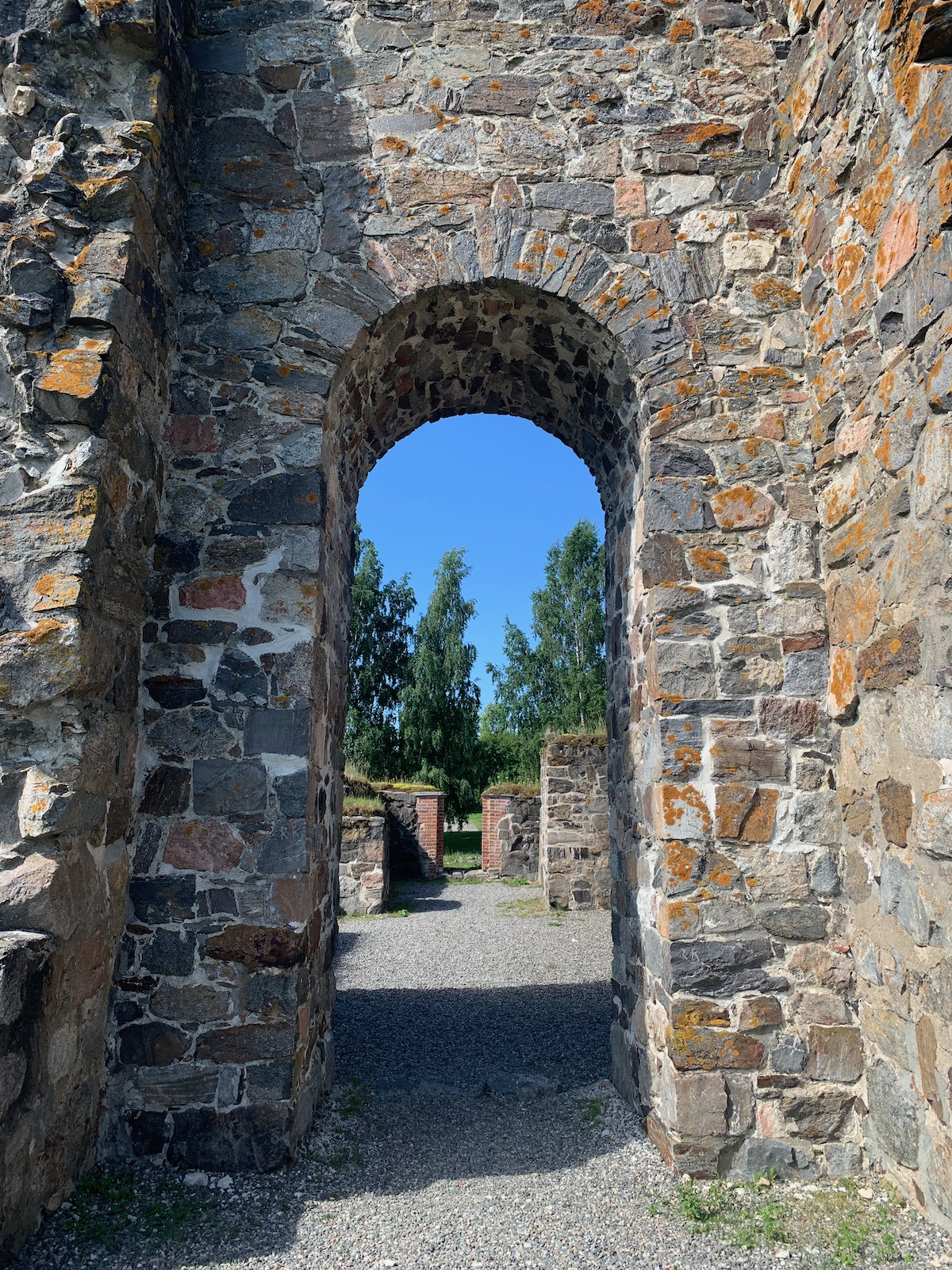
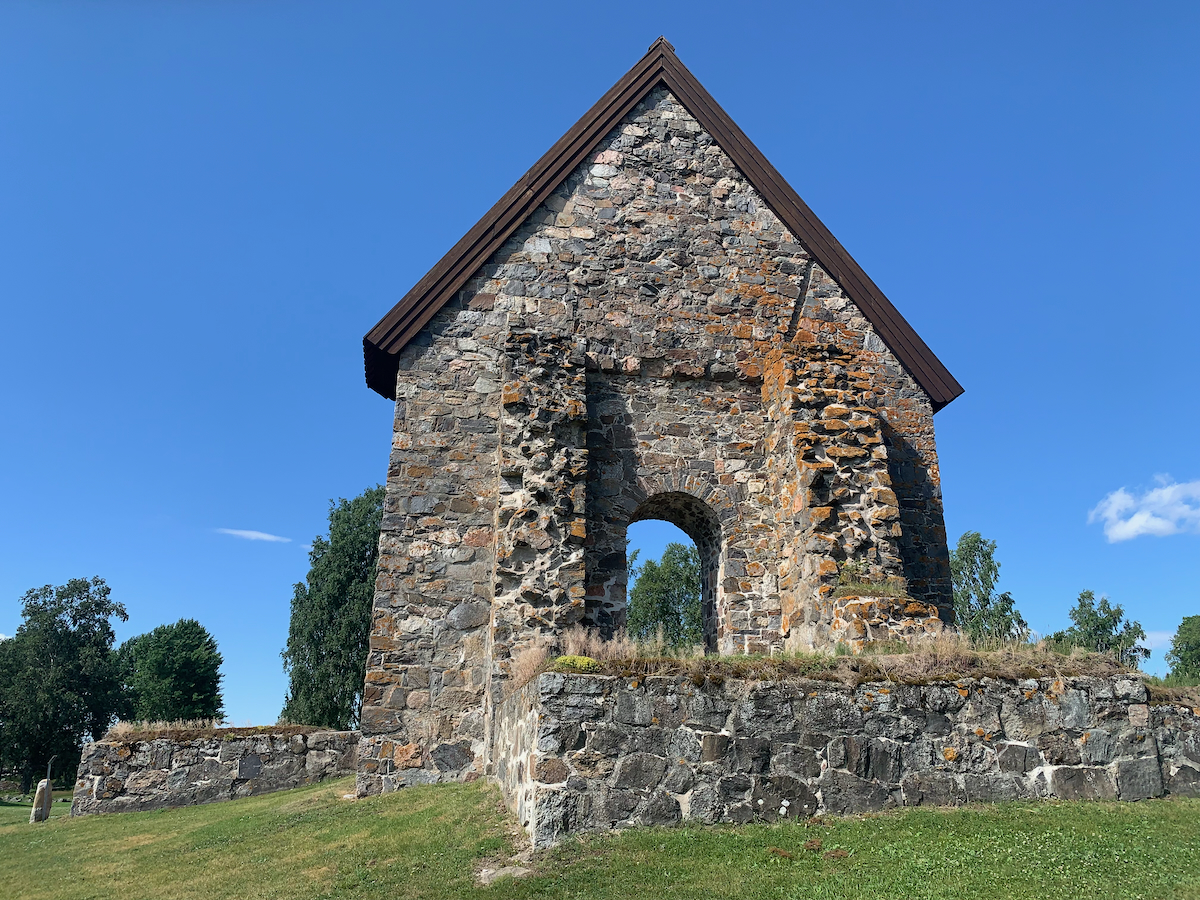
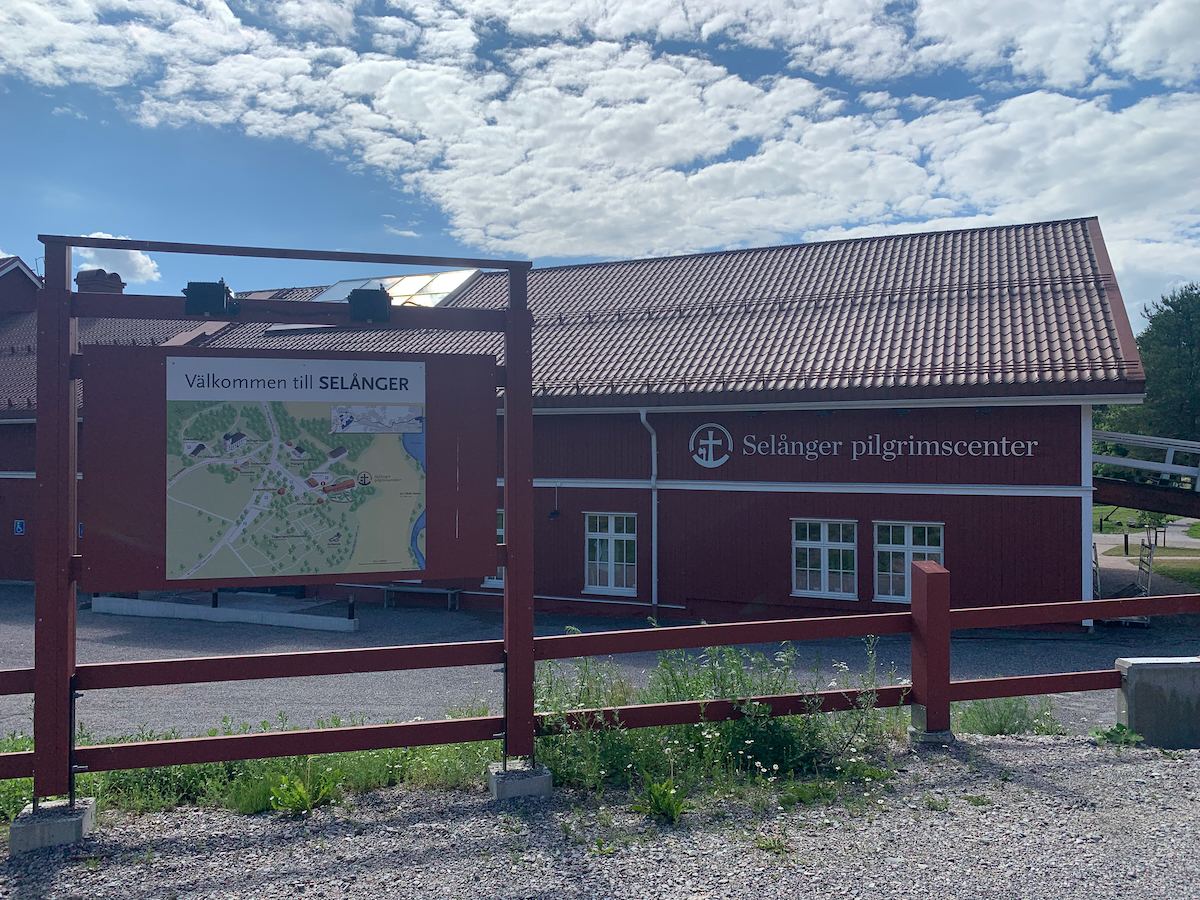
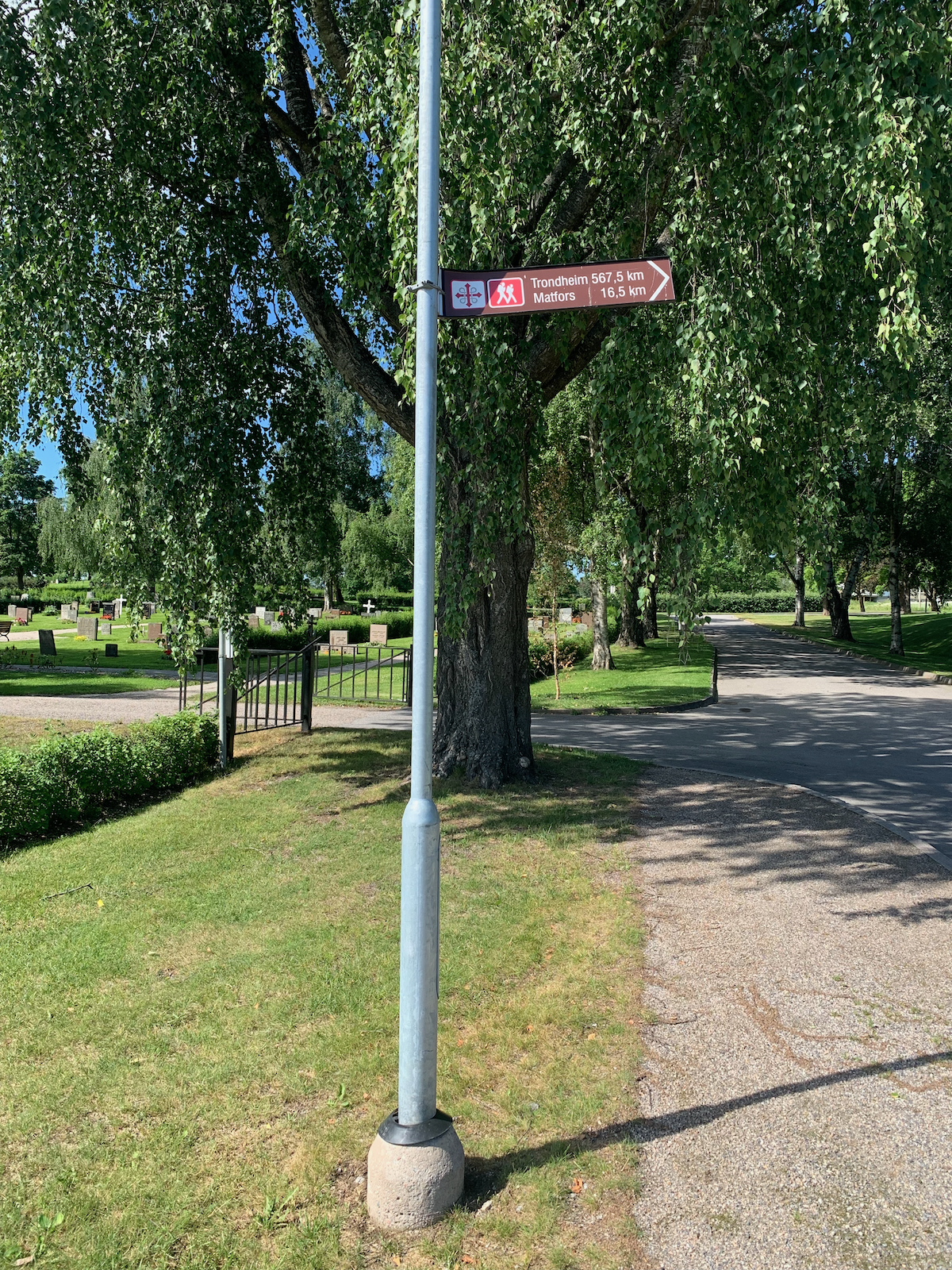
Selånger church ruin is the end point of the cycle route On the Way to St Olav and the starting point of the S:t Olavsleden.
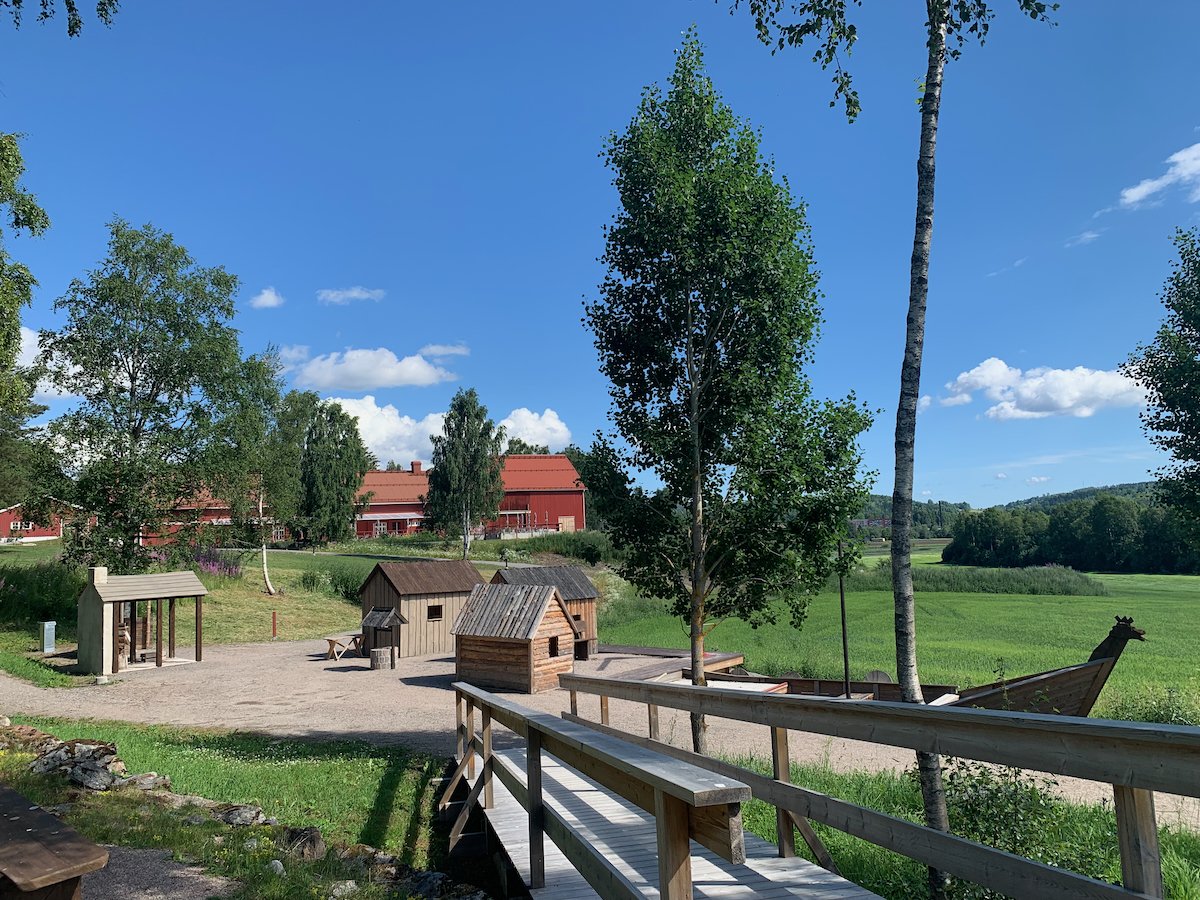
In the early summer of the year 1030, the Norwegian Viking king Olav Haraldsson landed at Selånger, then the great harbour bay of northern Sweden, for what turned out to be his last warpath. Near the ruins is a decorative sign indicating the spot where Olav landed. According to tradition, St Olav erected a copper-clad cross here with the words, ‘Land för stam i Jesu namn’ (freely translated: ‘Our land for our people, in the name of Jesus’). The Olav trail starts at the ruins of the 12th-century church. A place where pilgrims left in the Middle Ages on their way to the grave of Olav, then canonized.
A thousand years ago, the landscape in Selånger differed greatly from the present state. The name Selånger means a calm bay. When Olav arrived in Sweden, Selånger was a port town with a bay in which there were a few islets where Sundsvall is today. In the 11th century, the port was very important for trade between Medelpad and Norway. Meanwhile, the picturesque bay and its waters have long since disappeared.
Visiting the ruins of Selånger’s old church today means standing in a place that has been significant for over a thousand years. Long before stone walls were built, a wooden chapel likely stood here as early as the eleventh century, near the coastline and the natural harbor that would later be called St. Olav’s Harbor. Back then, the sea reached much further inland, and Selånger served as a gateway to the heart of northern Sweden.
The site was not only strategically important but also symbolically significant. According to tradition, the Norwegian king Olav Haraldsson (St. Olav) may have landed here in 1030 on his way to his final campaign. Whether or not this is historically verifiable, the story highlights Selånger’s early religious importance.
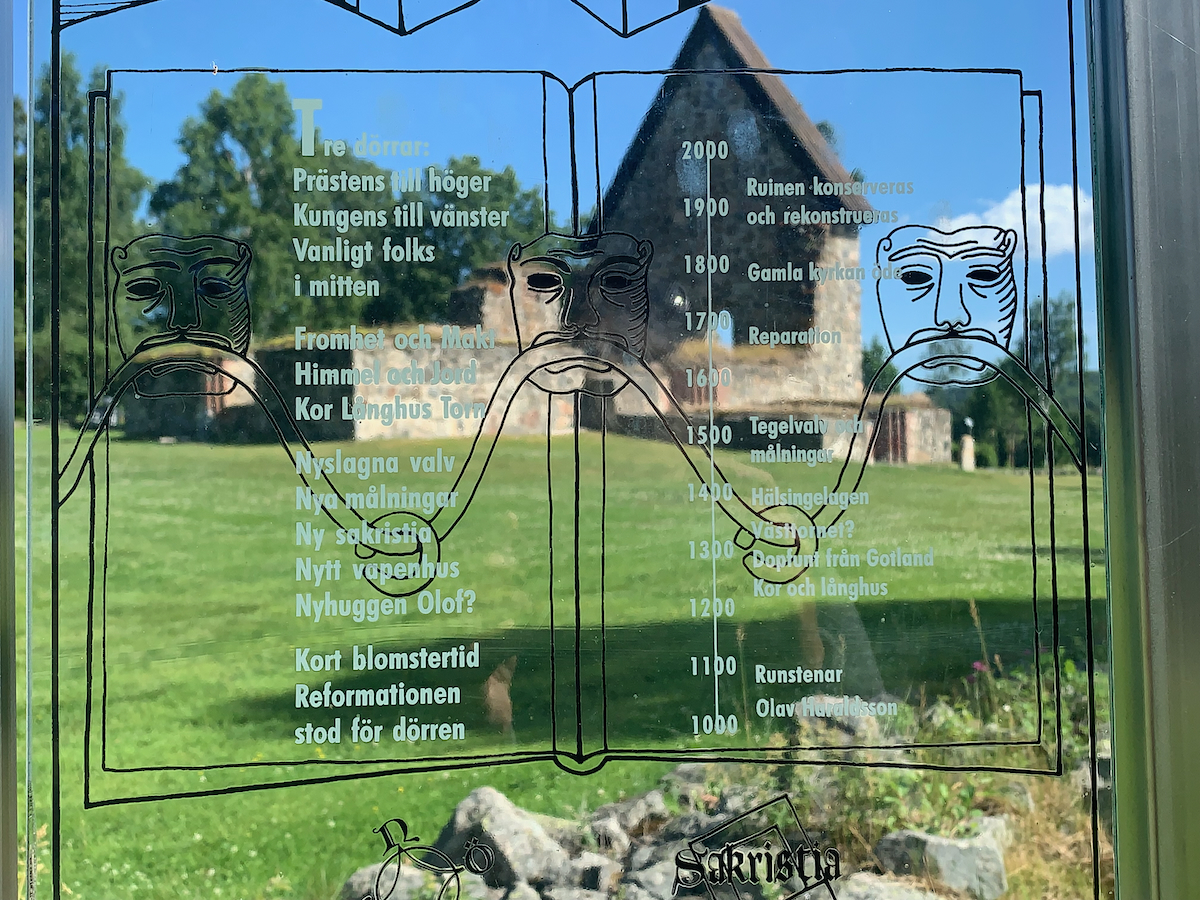
The ruins you see today are from a stone church built in the thirteenth century, likely replacing the earlier wooden chapel. In the fifteenth century, the church was expanded and modernized with a tower, a new portal, and a sacristy, and its interior walls were decorated with colorful frescoes. These paintings were not just ornamental—they helped tell biblical stories to a largely illiterate population.
In the Middle Ages, Selånger Church played a role far beyond religious life. It once housed the original Hälsinge Law from the 1320s, a law that governed large parts of northern Sweden and Finland, which was then part of the Swedish realm. To protect this precious document, it was fastened to the church wall with a 2.5-meter-long iron chain—a striking symbol of the law’s authority.
The law famously began:
"The land shall be built on laws, not on violent deeds."
For centuries, provincial laws like this were the foundation of Scandinavia’s legal system. Around 1350, they were replaced in Sweden by a single national law: the Law of Magnus Eriksson.
From the seventeenth century onward, Selånger slowly lost its central role. Over time, the land rose again after the Ice Age, and the sea gradually receded from the coast. Eventually, Selånger’s old harbor became unreachable. By the 1780s, the church had fallen into disrepair, and a new church was built on a nearby hill, leaving the old building abandoned.
Near the southern wall of the ruins stands a broken runestone from the eleventh century. Though the inscription is incomplete, it is usually read as:
"Une, Karl, and Ane raised this stone in memory of their father."
The stone is a reminder that this site was an important gathering and commemorative place even before the stone church was built.